
Physician loans · Seattle and Washington State
Physician Loans in Seattle and Washington State: A Guide for Doctors Buying a Home
A physician loan lets a doctor buy a home with little or nothing down, no mortgage insurance and a gentler view of student loans, often before the first paycheck. In Seattle it is a real advantage, but it is not automatically the cheapest loan, and it has a few local wrinkles worth knowing before shopping.
Brian Huie, a Principal Broker and Realtor with Compass in Seattle, has helped physicians and dentists buy homes in Seattle since 2018. Some of those buyers used a physician loan and won their home with 0% down. A few ran the numbers and chose a conventional loan instead. Both were the right call for them.
This guide covers how physician loans work, who qualifies, what they look like in Washington in 2026, how they compare with other loans, and what Brian has learned from writing offers with them.
Where are you in your training?
Pick one. You will get the three parts of this site that matter most at your stage.
The clock starts at Match Day. Most physician programs qualify graduating students and residents, often with lower loan limits than attendings, and many close on a signed contract before the first day.
Read these, in this order
- Residency timingMatch Day to a July start, and how close to day one a lender will close.
- How student loans countThe same balance can count as $2,000 a month or nothing, depending on the rule.
- Who qualifiesCredentials and career stage, lender by lender.
The first question is how long you will be here. Buying and selling cost enough that it often takes about five years to come out ahead.
Read these, in this order
- Renting or buying near the hospitalNine hospitals, nearby rents and values, and the break-even math.
- A note for residentsUW pay for 2026-27 and what a resident salary supports.
- How student loans countWhy the repayment plan can change what you qualify for.
With a signed contract, many lenders close anywhere from about 60 to 180 days before the start date, usually with reserves to cover the gap. Price a physician loan against a conventional one the same day.
Read these, in this order
- Closing before your first dayStart-date windows and the reserves lenders ask for.
- Physician vs. conventionalReal monthly numbers at $900,000 and $1,250,000.
- What wins offers in SeattleWhy the loan officer can matter as much as the rate.
With cash for 20% down, a conventional loan usually costs less over time. Above the $1,063,750 King County limit for 2026, physician programs often ask for 5% to 10% down, and some cap doctors further out of training.
Read these, in this order
- Physician vs. conventionalWhere each loan wins, with PMI and jumbo lines drawn in.
- What it looks like in SeattleJumbo limits, Washington lenders and community property.
- Buying a condoHow lenders review a Seattle building before they approve the loan.
At a glance
- WhoMDs and DOs everywhere; dentists and podiatrists at most lenders; vets, optometrists, pharmacists, PAs and CRNAs at some.
- Down paymentOften 0% up to about $1 million, then 5% to 10% as the loan grows.
- Mortgage insuranceNone, though the rate is often a little higher to make up for it.
- Student loansCounted gently, and sometimes left out if they are deferred.
- TimingMany lenders close on a signed job contract, with the start date anywhere from 60 to 180 days later depending on the lender.
- In SeattleWith little or no down payment, many purchases cross the $1,063,750 King County conforming limit for 2026, which makes them jumbo loans.
By Brian Huie, Principal Broker and Realtor, Compass · Figures as of November 2026
Go deeper
Five deeper guides
 The numbersPhysician vs. conventionalReal monthly numbers at $900,000 and $1,250,000.
Student loansHow student loans countThe same balance can count as $2,000 a month or nothing, depending on the rule.
TimingResidency timingMatch Day to a July start, and how close to day one a lender will close.
Rent or buyNear Seattle hospitalsNine hospitals, nearby rents and values, and the break-even math.
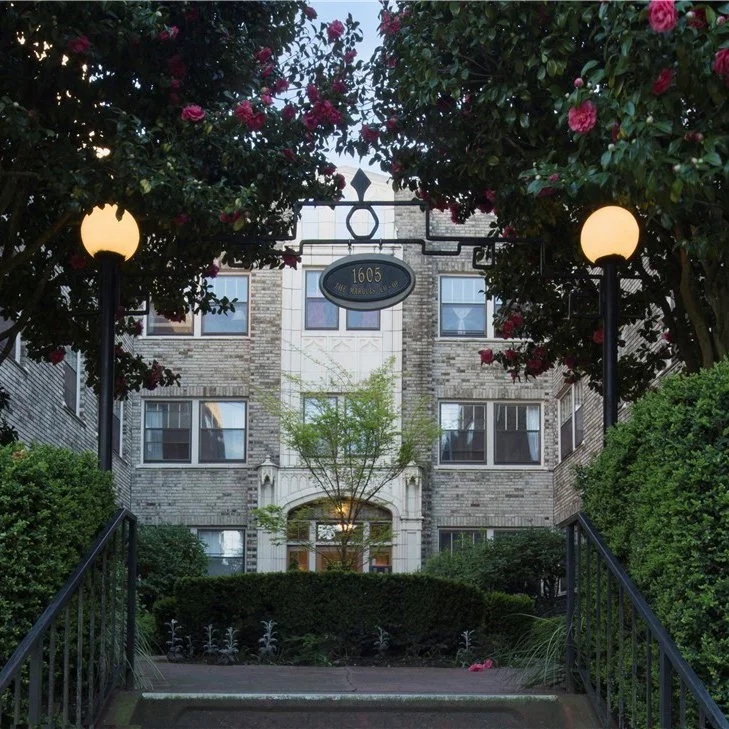 CondosBuying a Seattle condoHow lenders review a Seattle building before they approve the loan.

What a physician loan is
A physician loan is a bank's own mortgage program for doctors. There is no government version and no standard set of rules, so every lender's program is a little different.
It exists because new doctors are a strange fit for normal mortgage rules. Many finish training with six-figure student debt (71% of the medical school class of 2024 borrowed, with a median of $205,000), little time to save, and a job that hasn't started yet. On paper that looks risky. In practice, lenders report low default rates on their own books, and doctors often become long-term clients, so many keep these loans on their own books instead of selling them. That is also why a program can exist in one state and not the next.
One thing it is not: a discount. Doctors don't get a lower rate for being doctors. What they get is easier access, less cash needed up front and no mortgage insurance.
Who qualifies
Every program covers MDs and DOs. Beyond that, it depends on the lender.
| Credential | How common |
|---|---|
| MD, DO | Every program |
| DDS, DMD (dentists) | Most programs |
| DPM (podiatrists) | Common |
| DVM, OD (vets, optometrists) | Some lenders |
| PharmD, PA, NP, CRNA | Fewer lenders |
| ND, chiropractors | Rarely; some lenders exclude them |
Stage of career matters too.
- Graduating students, residents and fellows qualify at most programs, often with lower loan limits than attendings.
- Time since training can be a cap: some programs limit or exclude doctors more than 10 or 15 years out of training.
- Practice owners and self-employed doctors usually need about two years of self-employment history, and some lenders will review 1099 contracts.
- Doctors on work visas qualify at some lenders; ask early.
A naturopathic couple Brian worked with learned the hard way that "doctor" doesn't always mean what people expect; their lender's physician program didn't include NDs. Ask a lender to confirm the exact credential before planning around one.
How the terms work
Most programs follow the same shape: the bigger the loan, the more the buyer puts down. Here is how four national programs published it as of November 2026.
How the down payment steps up as the loan grows
0% down3% down5% down10% down15% down
| Lender | 0% down up to | 5% down up to | About 10% down up to | Washington |
|---|---|---|---|---|
| Huntington | $1M | $1.75M | $2.5M | Not stated on its page; ask |
| BMO | $1M | $1.5M | $2M | All states except New York |
| Truist | $1M | $1.5M | $2M | All states except Alaska, Arizona, Hawaii |
| Bank of America | No 0% option: 3% down to $850K | $1M | $1.5M (15% down to $2M) | Not stated on its page; ask |
KeyBank, which has Seattle branches, lends up to $3.5 million with no mortgage insurance; its page doesn't publish tiers.
Terms as published by each lender; not an offer of credit. Terms change often, and some programs cap doctors who are further out of training. Confirm current numbers with the lender.
No mortgage insurance, but not free
On a conventional loan, putting less than 20% down usually means private mortgage insurance, often $30 to $70 a month for every $100,000 borrowed. Physician loans skip it. Lenders usually make up for it with a slightly higher rate, so the savings are real but smaller than they look.
Student loans
This is where physician loans help most. A conventional loan may count a deferred student loan at 1% of the balance each month, so $200,000 of debt adds $2,000 a month to the debts a lender counts. Many physician programs instead use the actual income-driven payment, or leave the loan out entirely if it stays deferred for at least 12 months after closing. Federal loans first borrowed after July 1, 2026 repay under new plans (RAP or a tiered standard plan), so ask each lender how they count them. More: how student loans count, with examples.
Closing before the first day
Many programs allow closing on a signed employment contract before the job starts. The window varies: about 60 days at some lenders, 90 at several large banks, and up to 150 or 180 at others. Expect to show reserves that cover costs until the first paycheck. Conventional loans can do this too, with a start date up to 90 days after closing. More: timing a purchase around residency and a new job.
Other terms to compare
- Primary home only. Second homes and rentals almost never qualify; a few lenders allow an owner-occupied duplex.
- Condos. Many programs allow them if the building meets standard condo rules; some exclude condos or add to the rate. Not every Seattle condo building meets them, so check the building early. More on condos.
- Adjustable rates are common. Many physician loans are ARMs with a fixed period of 3 to 15 years. That can make sense for a doctor who expects to move or refinance, but plan for the payment after the fixed period ends.
- Credit and debt. Expect a minimum score around 680 to 700 and a debt-to-income limit near 45% to 50%.
- Gifts and seller credits are usually allowed, which helps since zero down still leaves closing costs. On a $1 million loan, one lender quoted Brian's client about $12,000 in 2023.
- Bank relationships. Some banks lower the rate for opening checking or investment accounts with them.
- Who's on the loan. Some programs want only the physician on the loan and the contract, with a spouse added to title after closing.

What it looks like in Seattle
Three local facts shape a physician loan here more than anything else.
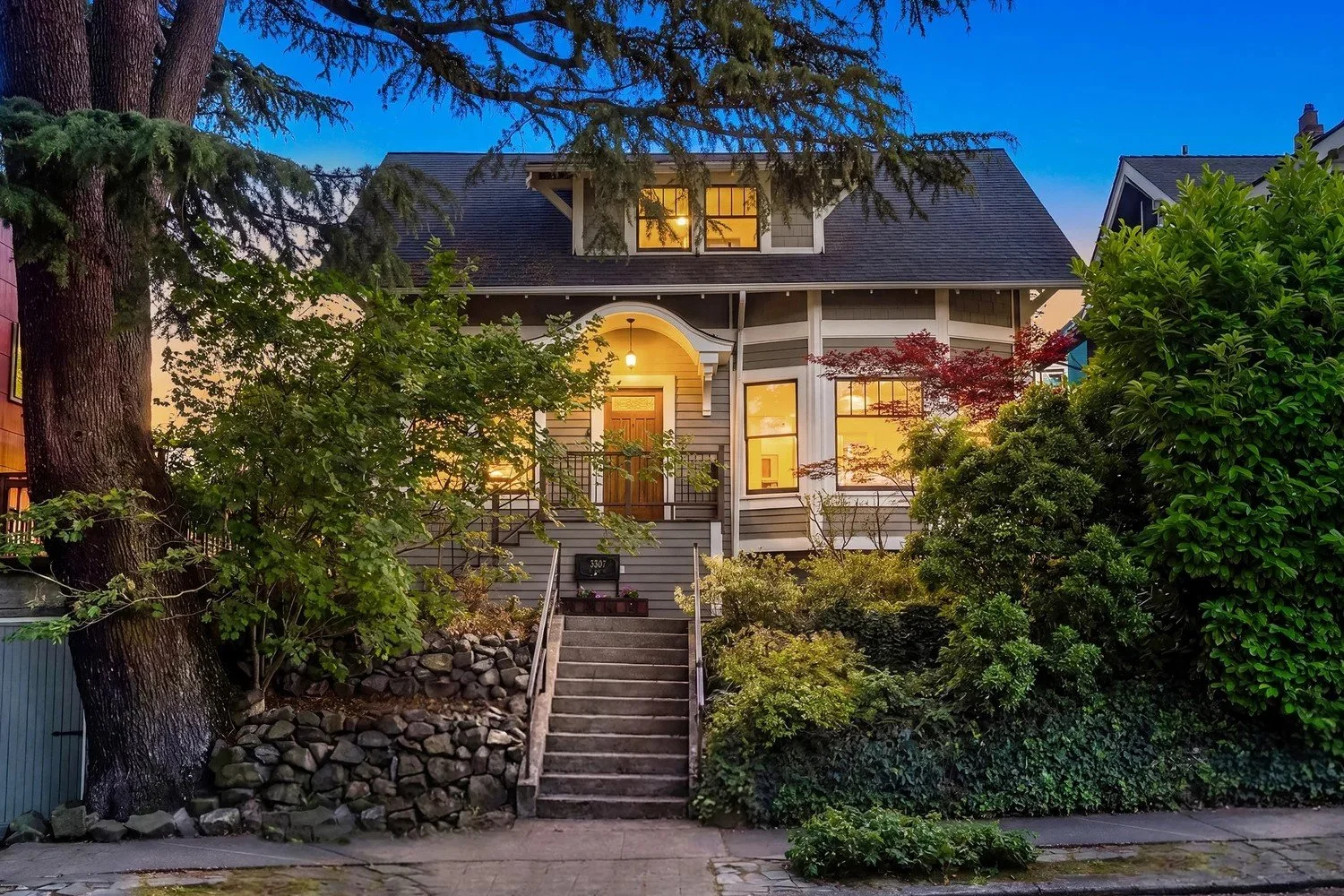


Three Seattle homes from Brian's past sales.
1. Prices push many loans into jumbo territory. The 2026 conforming loan limit in King, Pierce and Snohomish counties is $1,063,750 for a single-family home. The typical Seattle home value was about $823,000 at the end of September 2026, and the King County median sale price was about $848,000. With little or nothing down, a doctor buying at or above those levels quickly passes the limit, which is exactly where physician programs start asking for 5% or 10% down. Look at each lender's tiers, not just its headline "0% down."
2. Few Washington banks have their own program. Most doctors here use a national bank or a mortgage lender that offers a physician program. Two local names advertise something close:
- Washington Trust Bank (Spokane) offers specialty mortgages with up to 100% financing for doctors, dentists, veterinarians and other healthcare professionals.
- Salal Credit Union (Seattle) offers healthcare-worker home loans with no monthly mortgage insurance for nurses and doctors.
Some local mortgage lenders also offer physician programs; Global Credit Union Home Loans in Renton, for example, advertises a doctor and dentist mortgage with up to 100% financing.
Several other Washington banks and credit unions have no physician program at all, and some national programs don't lend in every state. Confirm the lender serves Washington before getting attached.
3. Washington is a community property state. That can affect how a spouse's debts are counted on some loans, even if only one spouse is on the mortgage. Ask the lender how they handle it.
A note for residents
UW Medicine trains more than 1,300 residents and fellows. Its 2026-27 pay scale runs from $90,984 in the first year to $116,664 in the ninth. A physician loan can qualify a resident who wouldn't otherwise qualify, but residency salary supports a much smaller payment than an attending salary will, and many residents move when training ends. For some, renting until the attending job is set is the better plan. More: renting vs. buying near Seattle hospitals.
For doctors who are also veterans, a VA loan may beat a physician loan. Brian's VA buyer's playbook covers how it works.
Physician loan vs. other loans
A physician loan wins on cash needed and on qualifying. A conventional loan often wins on total cost. The only way to know which is better is to price both on the same day. See the numbers side by side.
| Loan | Least down | Mortgage insurance | Often the better fit when |
|---|---|---|---|
| Physician | 0% to about $1M | None | Cash is tight, student loans block qualifying, or closing comes before the job starts |
| Conventional, 20% down | 20% | None | The cash is there; usually the lowest rate |
| Conventional, 3% to 5% down | 3% to 5% | Yes, removable at about 20% to 22% equity | Sometimes a lower monthly payment than a physician loan |
| FHA | 3.5% | Yes, usually for the life of the loan | Rarely the best fit for doctors |
| VA | 0% | None (a funding fee applies unless waived) | The buyer is an eligible veteran |
| Jumbo | Often 10% to 20% | Varies; often none at 20% down | Above the $1,063,750 limit with cash to put down |
In Brian's own files, conventional loans have come out ahead more often than people expect. In 2023 a lender ran both options for a physician family and the conventional loan with 5% down had the lower monthly payment. In 2025 a returning physician client chose 5% down conventional. Another physician switched to a conventional loan with 20% down for a better rate and better service.
When doctors compare, Brian has them price both loans: he asks lenders for both quotes on the same day, for the same home price, because rates move daily and the gap between lenders can be wide. In October 2022, one of his buyers saw 30-year physician loan quotes more than a full point apart between lenders.

How the process works
Buying with a physician loan follows the usual path, with two extra checks at the start and, often, a longer close.
- Confirm the fit. Make sure the lender serves Washington, accepts the credential and stage of training, and allows the type of home.
- Get pre-approved. Expect to provide a signed contract or residency letter, license, student loan statements, two years of tax returns and W-2s, recent pay stubs and asset statements. Some banks also ask for a new checking account.
- Compare two lenders on the same day, including a conventional option. Each must send a Loan Estimate within three business days of the application.
- Ask whether the file can be fully underwritten before the offer. Some physician programs can't do this, and in a competitive market it matters.
- Write the offer, then appraisal, underwriting and title. With nothing down, a low appraisal has no equity to absorb it, so plan for that before offering.
- Close inside the lender's start-date window, with reserves to carry through to the first paycheck if required.
In Brian's experience, physician loans have usually taken 28 to 40 days to close. A loan that is fully underwritten before the offer can close in 9 to 17 days, and a few physician programs can do that.
What Brian has seen in Seattle offers
A physician loan can absolutely win a competitive home, but the details around it matter.
- 0% down can win. A surgeon Brian worked with in 2019 bought with a 0%-down physician loan, and the seller accepted the offer within three days.
- Speed and certainty can beat it. In May 2026, a physician buyer offered on one of Brian's listings with a 0%-down loan, a contingency for financing and inspection, and a gift ready to cover a low appraisal. Three other buyers waived every contingency, and the winning offer had a fully underwritten loan.
- The loan officer matters as much as the rate. In 2022, one of Brian's buyers saved about a point on the rate with an out-of-state bank. The listing agent couldn't reach the loan officer and had never heard of a physician loan. Brian estimates it cost real negotiating room on an $800,000 home.
Brian tells buyers that in a 20- to 30-page offer, the lender is the single most heavily weighted item, with price a close second.
Brian tells these stories in his own words on his journal: What I've Learned Writing Offers With Physician Loans.
How Brian structures a physician-loan offer to compete, from appraisal cushions to escalation, is in the client section of his buyer's guide.
Risks worth weighing
A physician loan makes buying easier. It doesn't make the house cheaper, and a few risks come with borrowing nearly all of the price.
- No equity on day one. If prices dip, a buyer can owe more than the home is worth, which makes selling or refinancing harder for a while.
- Rate resets. With an adjustable rate, the payment can rise sharply after the fixed period. Make sure the highest possible payment would still work.
- Moving soon. Buying and selling cost enough that it often takes about five years to come out ahead, and many doctors change jobs within a few years of finishing training.
- Buying too much house. Lenders may approve far more than is comfortable. The physician-finance site White Coat Investor suggests a mortgage under about two times gross income, stretching to three or four times in high-cost areas.
- Little cash left over. With nothing down, repairs and surprises come straight out of savings, so keep a cushion.
None of these are reasons to avoid a physician loan. They're reasons to choose the size of the home and the type of rate on purpose.

Questions doctors ask Brian
Do doctors get a lower mortgage rate?
Not for being doctors. A physician loan's benefit is less cash up front, no mortgage insurance and easier qualifying. The rate is often a little higher than a conventional loan with 20% down.
Can a doctor buy before residency or a new job starts?
Often, with a signed contract. Lenders allow closing anywhere from about 60 to 180 days before the start date, usually with reserves to cover the gap.
Do student loans count?
They count, but often more gently. Many physician programs use the actual income-driven payment or leave out loans deferred for at least 12 months after closing.
Can dentists, vets or PAs use a physician loan?
Dentists can at most lenders. Vets, optometrists, pharmacists, PAs, NPs and CRNAs can at some. Confirm the credential with the lender before planning around it.
Can a physician loan be used for a condo in Seattle?
Many programs allow condos, but the building usually has to meet standard condo rules, and some lenders charge more or exclude condos. Check the building before offering.
Does zero down mean zero cash to close?
No. Closing costs still apply, and many lenders want reserves. Gifts and seller credits can help.
Will a 0%-down offer look weak to a seller?
It can if the loan isn't underwritten or the loan officer is hard to reach. A local loan officer, a fully underwritten file where the program allows it, and a plan for a low appraisal make a real difference.
Is a physician loan a good idea?
It is when cash is the limit: savings stay free for reserves, repairs or high-interest debt, there is no mortgage insurance, and qualifying can happen before the job starts. It is a weaker choice with 20% to put down, a plan to move within a few years, or a stretch for the house.
Which banks offer physician loans in Washington?
National banks such as BMO, Truist, KeyBank and Bank of America offer them here, along with several mortgage lenders. Locally, Washington Trust Bank and Salal Credit Union advertise healthcare-professional programs. Availability changes, so confirm each lender lends in Washington.
Is a physician loan always the best choice for a doctor?
No. With cash for 20% down, a conventional loan usually costs less over time, and sometimes even 5% down conventional has the lower payment. Price both on the same day.
Next steps
For a doctor thinking about buying in Seattle, the best start is a few months ahead: confirm which lenders fit the credential, price a physician loan against a conventional one, and get underwritten before writing offers.
- How Brian helps buyers
- Brian's buyer's guide, including the physician loan section for clients
- VA buyer's playbook, for doctors who are also veterans

This guide is general information, not a loan offer or financial advice. Brian Huie is a real estate broker, not a lender, and Brian is not paid by any lender. Loan programs and terms change often; confirm everything with a licensed loan officer, whose license can be checked on NMLS Consumer Access. Figures as of November 2026.
Sources
- Loan limits: FHFA 2026 conforming loan limits
- Prices: Zillow Seattle home values, Redfin King County market
- Lender programs: Huntington, TD Bank, BMO, Truist, Bank of America, Washington Trust Bank, Salal Credit Union
- Student loans and job contracts: Fannie Mae student loan rules, Fannie Mae employment contracts, AAMC debt fact card
- Comparing loans: CFPB loan options, CFPB on PMI, VA funding fee, HUD FHA mortgage insurance
- Residents: UW GME pay schedule, UW GME
- Photos: homes from Brian's past sales; stock photos by Sasun Bughdaryan, Zhifei Zhou, Filip Szalbot, Sasun Bughdaryan, National Cancer Institute, Nappy, Zhifei Zhou on Unsplash
- Context: Medical Economics, Bankrate, White Coat Investor, WA community property law